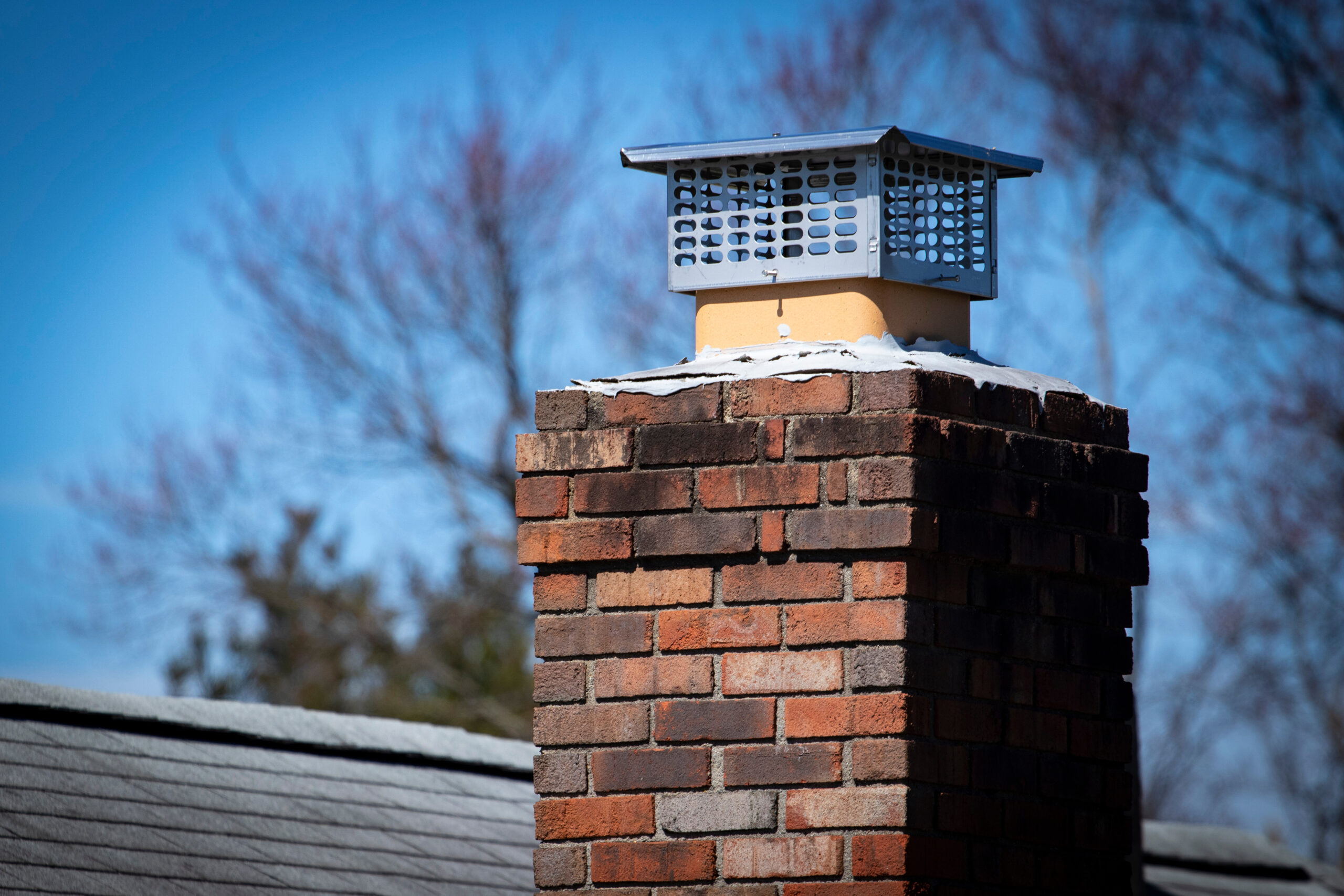
Understanding cracks in chimney structures before they get worse
If you have noticed cracks in chimney bricks, mortar, or the crown, you are not alone. Small cracks can happen as a chimney ages, and not every line you see means you need an expensive rebuild. Still, some cracks spell trouble for safety, heat efficiency, and your home’s structure. In this guide, Elite Chimney explains what is normal wear, what needs fast attention, why cracks happen, and the most common repair options and costs in Southeastern Wisconsin and Northeastern Illinois. You will also learn how to spot early warning signs and when to call a certified chimney sweep.
What causes cracks in a chimney
Knowing the cause helps you judge how serious a crack is and how to fix it. Most cracks in chimney systems come from a mix of weather, heat, and age. Here are the main culprits.
- Freeze and thaw cycles: Water gets into tiny gaps. When it freezes, it expands and pushes masonry apart. Over time you get bigger cracks and loose bricks.
- Thermal expansion: Heat from fires expands materials. When they cool, they contract. Repeated cycles stress mortar, clay flue tiles, and crowns.
- Water intrusion: Poor caps, cracked crowns, or bad flashing let water in. Moisture weakens mortar joints and can rust metal parts.
- Settling and movement: Homes shift slightly over time. Chimneys can settle differently than the house frame which creates stair-step cracks.
- Improper materials: Weak mortar, low quality bricks, or thin crowns crack faster. A missing or damaged liner also leads to heat damage.
- Chimney fires: Even a small flare-up can superheat flue tiles and cause long cracks or warped liners.
- Age and lack of maintenance: Small issues grow when inspections and simple fixes get skipped.
Normal vs. concerning chimney cracks
Use this quick guide to see what you may be looking at. When in doubt, get a professional inspection. Elite Chimney can confirm the cause and the best repair path.
Usually normal
Not all cracks in chimney masonry are emergencies. Here are common minor issues that still benefit from upkeep.
- Hairline mortar shrinkage cracks: Thin surface lines in mortar that do not widen as they go deeper. These often come from curing or minor age. Tuckpointing or sealant may be enough.
- Minor thermal checking in flue tiles: Small surface crazing that does not go through the tile. This still needs monitoring, and sometimes relining if it worsens.
- Surface spider cracks in the crown: Thin, shallow cracks in the top concrete surface that do not open wide. Crown sealing can often stop water intrusion.
Concerning or unsafe
These cracks in chimney structures can allow water, smoke, or heat to escape into places they should not. They can also point to movement or fire damage.
- Stair-step cracks across multiple mortar joints: Often a sign of settling or structural stress. Needs evaluation and repair to stop spreading.
- Horizontal cracks or gaps between bricks: Can signal shear stress. Often linked to movement or freeze damage.
- Through-cracks in flue tiles: Any crack that runs through the tile can allow heat and gases into the chimney walls. Relining or repair is needed.
- Spalling bricks that flake or pop: Water has gotten in and the surface is breaking off. Bricks may need replacement and water entry must be fixed.
- Gaps between chimney and house or at flashing: Water will get in and cause rot or damage to framing.
- Deep, wide crown cracks with missing chunks: Allows major water entry. Often needs a new concrete crown.
- Cracks around dampers, smoke chamber, or firebox: Can let sparks or heat escape. These areas are fire sensitive and need refractory repairs.
Where cracks in chimney systems show up and what they mean
Chimney crown
The crown is the concrete or mortar slab that covers the top of the chimney. Thin surface lines are common. Wider cracks, missing pieces, or crowns that slope inward instead of shedding water are serious. A cracked crown lets water soak into the chimney, which leads to spalling and interior damage. Crown sealing, crown repair compounds, or a full crown rebuild are typical solutions.
Chimney cap
A metal cap with a screen protects the flue from rain, animals, and debris. If the cap is missing, loose, or dented, moisture can get in and cause cracks deeper in the system. Replacing or upgrading the cap is a simple but important fix.
Brick and mortar joints
Hairline mortar cracks are common. Stair-step cracks, crumbling joints, or bricks that flake and pop indicate water damage or movement. Tuckpointing with the right mortar and replacing damaged bricks can restore strength and looks.
Flue tiles or liners
Clay flue tiles can develop small surface lines with age. Any crack that goes through the tile is unsafe because hot gases and carbon monoxide can leak into the chimney walls. A stainless steel liner or a cast-in-place liner brings the flue back to safe operation. Metal liners can also improve draft and support modern appliances.
Smoke chamber and firebox
The smoke chamber funnels smoke into the flue. The firebox holds the fire. Cracks in these high heat areas require refractory materials for repair. If mortar is missing or crumbling, smoke and heat can escape to flammable framing.
Flashing and roofline
Cracks or gaps at the chimney flashing let water in where the roof and chimney meet. You may see stains on ceilings or walls. Proper flashing with counterflashing and sealants stops leaks.
Warning signs that chimney cracks are already causing damage
Even small cracks in chimney masonry can lead to bigger headaches. Watch for these symptoms.
- White staining on bricks called efflorescence which points to moisture traveling through masonry.
- Musty odors from the fireplace or near the chimney during humid weather.
- Brown or yellow stains on ceilings or walls near the chimney chase.
- Draft problems including smoke backing into the room or a fireplace that is hard to start.
- Loose bricks or sandy mortar when you rub your hand on the joints.
- Rust on the damper, firebox parts, or chase cover on prefabricated chimneys.
- Chunks of flue tile in the firebox after a burn which could mean the liner has cracked.
DIY checklist to evaluate cracks safely
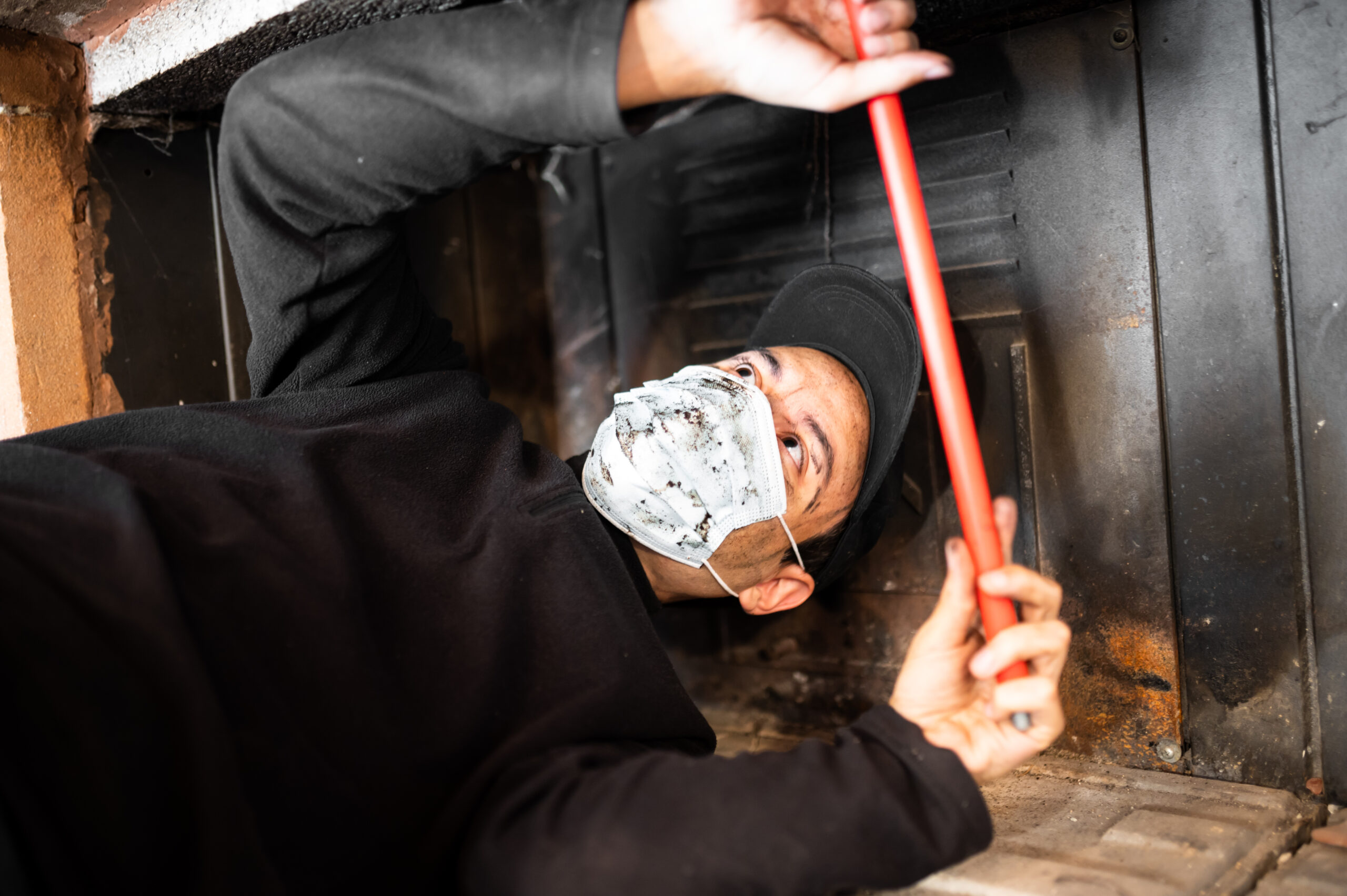
You can do a basic check from the ground and at the hearth. Stay off the roof unless you are comfortable and safe on ladders. If you see problems, call Elite Chimney for a full inspection by a Certified Chimney Sweep.
- Stand back and scan the chimney top to bottom. Look for leaning, bulges, or uneven courses of brick.
- Use binoculars to check the crown. Note any missing chunks, wide cracks, or ponding water.
- Look for vegetation growth between bricks which hints at retained moisture.
- Check mortar joints for deep gaps or crumbling edges.
- Inspect flashing where the chimney meets the roof. Look for gaps or lifted metal.
- From inside, open the damper and shine a flashlight upward. Look for shiny soot which hints at a past chimney fire, broken flue tiles, or gaps.
- Check the firebox and smoke chamber for missing mortar or visible cracks.
- After rain, sniff for musty odors and check ceilings around the chimney for stains.
- Note any pieces of tile, brick, or mortar in the firebox.
- Schedule a level 2 inspection if you suspect cracks in the liner or hidden areas. This includes a camera scan of the flue.
Repair options and typical costs
Every home and chimney is unique, and final prices depend on access, height, extent of damage, and materials. The following ballpark ranges help you plan. Elite Chimney keeps costs competitive by minimizing overhead while delivering certified work.
- Tuckpointing mortar joints: Replacing weakened mortar between bricks. Typical range 12 to 30 dollars per square foot depending on height and condition.
- Brick replacement: Swapping spalled or broken bricks with matching units. Typical range 25 to 45 dollars per brick including mortar and labor.
- Crown sealing: Flexible waterproof coating for hairline crown cracks. Typical range 250 to 600 dollars depending on size.
- Crown rebuild: New poured concrete crown with proper overhang and drip edge. Typical range 800 to 2,000 dollars.
- Flashing repair or replacement: New step and counterflashing with sealants. Typical range 400 to 1,200 dollars.
- Clay tile joint repairs: Limited area patching is rare and often a stopgap. Consider relining if through-cracks exist.
- Stainless steel liner installation: Best for cracked tiles, older systems, or appliance upgrades. Typical range 2,000 to 4,500 dollars for most single flues. Larger heights, offsets, and insulation can increase cost.
- Cast-in-place liner: Creates a smooth, insulated liner in place. Typical range 3,500 to 7,000 dollars, often used for odd shapes or severe damage.
- Smoke chamber parging: Refractory parge to smooth and seal cracks. Typical range 500 to 1,500 dollars.
- Firebox repairs: Refractory mortar joints or firebrick replacement. Typical range 300 to 1,500 dollars depending on scope.
- Chimney rebuilding: Partial or full rebuild if structural cracking is extensive. Typical range 2,500 to 10,000 dollars or more depending on height and design.
These are general estimates for Southeastern Wisconsin and Northeastern Illinois. Elite Chimney provides a clear written quote after inspection and offers options to match your budget and safety needs.
How to prevent cracks in chimney structures
Preventive care is the easiest way to avoid expensive repairs. Simple steps keep water and heat from doing damage.
- Annual inspection and cleaning: A certified sweep can catch small cracks before they spread and remove creosote that can spark chimney fires.
- Keep water out: Install a proper chimney cap, seal small crown cracks, and maintain flashing.
- Address leaks fast: Stains or musty smells around the chimney are early warnings.
- Burn the right fuel: Dry, seasoned hardwood produces less creosote and keeps flue temperatures stable.
- Avoid overfiring: Do not overload the firebox or use accelerants. High heat shocks tiles and liners.
- Maintain the liner: A sound liner protects masonry from heat and acids.
- Clear nearby trees: Reduce debris and limit moisture shade on the chimney.
Why homeowners choose Elite Chimney for cracks in chimney repair
Elite Chimney LLC is based in Kenosha, Wisconsin and serves Southeastern Wisconsin and Northeastern Illinois. Our certified chimney sweeps follow high industry standards to keep your home safe and your system efficient. We focus on expert work at fair prices by keeping overhead low and passing savings to you. When you see cracks in chimney bricks, crowns, or liners, our team inspects, documents the findings, and explains clear repair options without pressure.
Certified expertise you can trust
Elite Chimney is a Certified Chimney Sweep. That means we follow proven inspection methods, use proper materials, and comply with safety codes. We stand behind our work and keep you informed at every step.
Full-service solutions
From light maintenance to full rebuilds, we handle every part of your chimney system. Our services include chimney cleaning and inspection, chimney liners, chimney leaks, chimney caps and dampers, chimney rebuilding, gas fireplaces and gas log sets, and fireplace refacing.
Local service areas
We are proud to serve our neighbors across the region.
- Wisconsin: Kenosha County including Kenosha, Pleasant Prairie, Bristol, and Salem. Racine County including Racine, Mount Pleasant, and Waterford.
- Illinois: Lake County including Zion, Waukegan, Gurnee, Lake Forest, Highland Park, and Libertyville.
Contact Elite Chimney
Address: 2100 82nd Street, Kenosha, WI 53143
Phone: 262-358-4010
Email: contact@elite-chimney.com
Website: https://elite-chimney.com
Frequently asked questions about cracks in chimney systems
Are small cracks in chimney mortar a big deal
Hairline mortar cracks often start small and seem harmless. Left alone, water works into them and freeze cycles make them grow. Tuckpointing and water protection keep them from turning into a bigger repair.
Is it safe to use my fireplace if I see a crack
If the crack is in the firebox, smoke chamber, or flue, stop using the fireplace until a certified sweep inspects it. Heat and gases can escape into framing and cause a fire or carbon monoxide risk. If the crack is on the exterior mortar only, you may still use the fireplace, but schedule a prompt inspection to be sure.
Can I seal chimney cracks myself
You can seal tiny crown cracks or perform basic caulking at flashing if you are comfortable and safe on ladders. For deeper cracks, flue tile issues, or structural problems, call a professional. Using the wrong materials can trap moisture or fail under heat.
How often should a chimney be inspected
The National Fire Protection Association recommends yearly inspections. This is the best way to catch cracks early and keep your system safe and efficient.
What is the difference between a crack and spalling
A crack is a split or line in masonry or tiles. Spalling is when the brick face flakes or pops off due to moisture and freeze cycles. Both are signs that water management needs attention.
Do gas fireplaces cause cracks in chimney liners
Gas appliances can produce cooler exhaust that carries more water vapor and acids. Without the right liner, those byproducts can damage masonry over time. A properly sized liner is important for gas units.
Your next steps if you see cracks in your chimney
If you have noticed cracks in chimney bricks, the crown, or the flue, do not wait for a heavy rain or the first cold snap to make it worse. Schedule a professional inspection so you know exactly what you are dealing with. Elite Chimney will provide photos, a clear report, and repair options that fit your goals and budget. Whether you need simple tuckpointing, a new cap, a crown rebuild, or a full liner, our certified team will make sure your chimney is safe, efficient, and ready for Wisconsin and Illinois weather.
Call Elite Chimney today
Protect your home and peace of mind. If you are in Kenosha, Racine, or Lake County and see cracks in chimney masonry or smell musty odors, contact Elite Chimney. Call 262-358-4010 or email contact@elite-chimney.com to book your inspection. We are ready to help with expert service at a fair price, every time.